SULTAN GRILL

Hours

A known service hour is easier than a guess.

The house is open every day from 12:00 PM to 11:00 PM. The door does not open in the morning, and it does not stay for a second late sitting after eleven. Inside that span the room is not one continuous mood. Lunch is a plate and a shorter stay. The afternoon is the hour when a small table is easy to find. Dinner is the shared grill, the larger parties and the time you should have spoken to the house if you need more than four seats. The board below is that rhythm, not a timetable of named seatings. There are no set slots. There is a fire that starts at noon and a room that fills, then thins, then fills again. Plan the kind of meal against that shape rather than against a clock of named seatings. A skewer plate is welcome in every hour the door is open, as long as the cut is still there. A shared grill is welcome too, but it is a kinder order when you are not watching the door. Weekend lunch behaves more like a dinner than a weekday lunch does. If the table is the point of the day, confirm it. If the plate is the point, you can usually just come. The board is a rhythm, not a reservation system. Nothing on it holds a chair. It tells you when the room is likely to be kind to a quick plate and when it expects you to have spoken to the house already. Use it together with the grill page. A shared table on a Saturday night is a different plan from a kebab at three in the afternoon, even though both are inside the same open hours. If your group is mixing those two ideas — some people in a hurry, some people settling in — say so. The kitchen can send the quick plates first and let the shared grill follow, instead of holding everybody to the slower clock.

Service board

Window
Best use
Planning note
Lunch
Skewer plates, a kebab or a doner, and a table you can leave when the plate is finished. The shared grill is available if the fire has it, but lunch is happier as individual plates.
From 12:00 PM to about 4:00 PM. Come when you are hungry, not for a long ceremony. If you need to be back at a desk, say so and order the single plate rather than the spread. Weekend lunch fills earlier than a weekday.
Afternoon
Tea, a cold drink, bread and a smaller grill plate. A good hour to actually talk, and a good hour to look at the menu without a queue at your shoulder.
The room is usually quieter between the end of lunch and the start of the evening rush. The fire is still lit. The shared tables are easier to put together. It is the wrong hour only if you wanted the bustle of dinner.
Dinner
The shared grill, doner while the spit lasts, longer tables, and the full cold counter. This is the service the room is really built for.
After work is the busy window, and Friday and Saturday are the busy end of it. Call or write if the party is more than four, or if you want the mixed grill held for a particular hour. After 9:30 PM ask what is still on the fire before you commit the table to a specific cut.
Weekend
Longer family tables, the full fire when the kitchen still has it, and less hurry between the first plate and the last piece of bread.
Saturday and Sunday fill earlier than a weekday, including at lunch. Confirm the hour if the table matters. A walk-in can still happen, and often does, but it should not be the plan for a group that has already told everyone where to meet.

Before you leave home

A posted hour tells you when the door is open. It does not tell you whether the lamb is still on the fire, whether the spit has been carved down, or whether a table for seven can be made at eight o'clock on a Saturday. Check those three things with the house before you treat the board as a promise. The contact page carries the telephone and the email. Say the day, the hour and the number of guests, and mention a cut only if the visit depends on it. The reply is normally back within one business day. Faster when the room is not in the middle of dinner service. A good message names the constraint. If you must leave by a certain time, the house can steer you to a single plate. If the table is the evening, it can steer you to the shared grill and tell you whether that hour still has room. If a cut matters, ask about that cut and accept the answer if it has sold through. The pages can prepare you for those questions. They cannot answer them for a service that has not started, or for one that is already underway and changing. That is why the contact page exists, and why a posted hour is the start of the plan rather than the whole of it.

Call the house
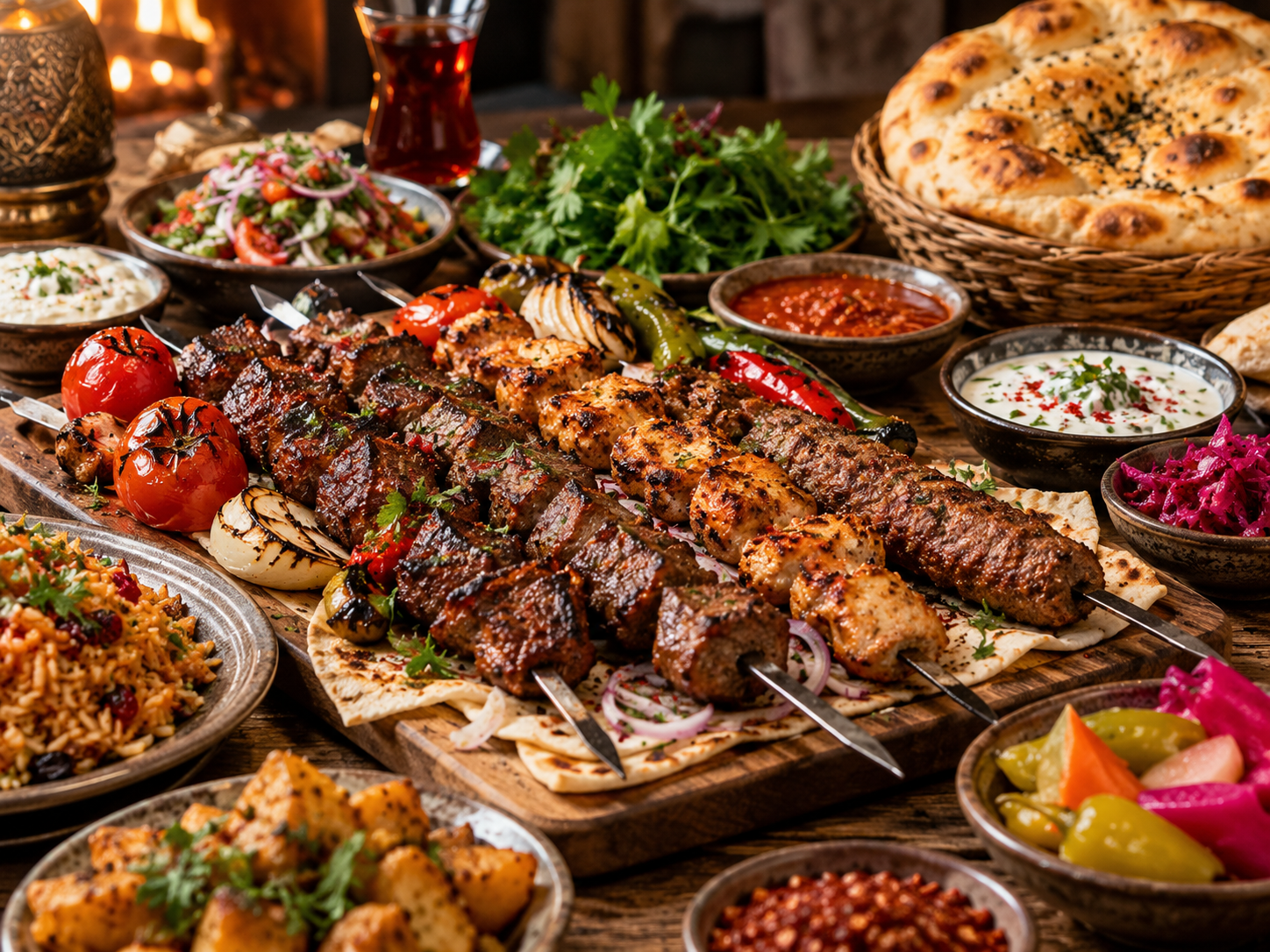
Shashlik plate with potatoes, peppers and herb flatbread

Busy dinner

Evening hours suit a shared grill better than a five-minute plate. The kitchen is geared to tables that stay, the bread keeps coming, and the room is louder. If you need to eat and leave, lunch or the late edge of the afternoon will treat you more kindly than the middle of dinner. Come for dinner when you want the room at full tilt: more tables, more bread going out, a shared grill that feels like the point of the place. Come earlier when you want to hear each other. Neither hour is the wrong hour. They are wrong only when the meal you ordered belongs to the other one. A five-minute plate in the middle of the Saturday rush will feel squeezed. A long shared table at three in the afternoon will feel almost private. Pick the hour for the meal, not the meal for an hour you happened to have free.

Quieter hour

Mid-afternoon is the easier window for a smaller table, a first visit, or anyone who wants to hear the person sitting opposite. The fire is still working. The wait is shorter. You will not get the full Friday-night feeling, and you should not expect it.

First visit

On a first visit, take the address from the contact page, tell the house your name if a table was confirmed, and ask what is on the fire before you order. Start with one skewer plate if you are unsure. Move to the shared grill on the next visit, once you know the seasoning and the pace.