Menus
Plate names, service notes and table rules belong together.
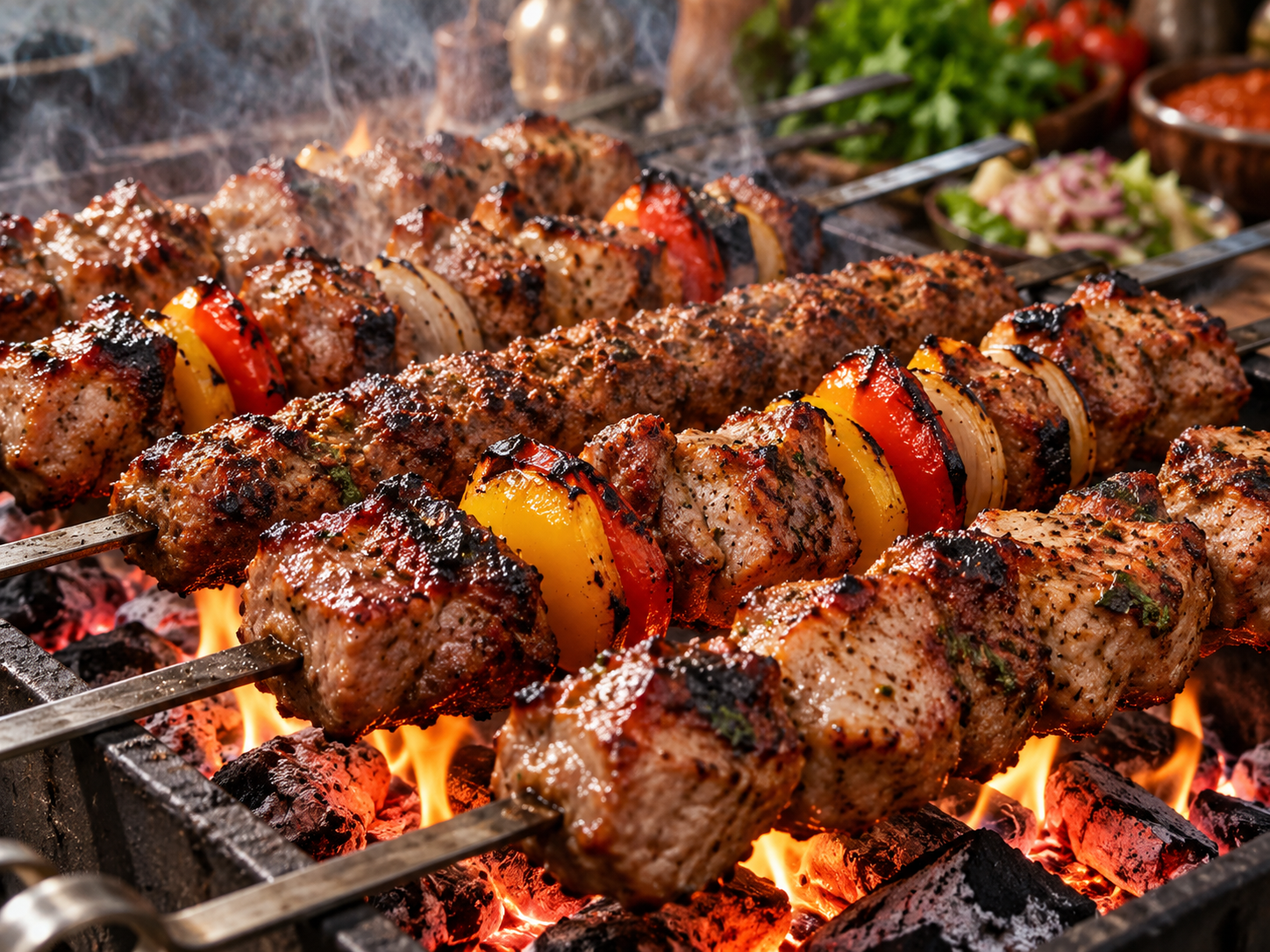
The board is not a price list and it is not a set menu you can pay for on this website. It is three ways the kitchen already sends food out, written side by side so you can see the difference before you call. A quick plate is one person's meal. A shared grill is a table's meal. A longer house meal is doner or kebab with the cold counter and enough time to sit. Prices, in Chilean pesos and with IVA included, are printed on the menu in the dining room and confirmed before you order. Use this page to choose the shape. Use the contact page, where the telephone and the email are printed, when you need seats held. Read the three styles as speeds as much as menus. The skewer plate is the fast honest meal. The shared grill is the slow one, and it is better. Kebab and doner sit in between: complete, seasoned all the way through, happy to be stretched with bread and salad if the table is not in a rush. You do not buy these styles on the website. You choose one so that, when you do write or call, the house understands the size of the meal and the size of the table in a single sentence. That saves the back-and-forth that happens when a message says only 'a table for tonight'.
Menu board
What guests should check
- The price on the menu in the dining room, in Chilean pesos, with IVA included, before you order. A description on this website is a guide. If the two ever differ, the menu in the room is the one that counts.
- How many seats the table actually needs, including anyone joining later. A table set for four that becomes seven at the door is a different problem from a table that was asked for as seven.
- Whether the shared grill, or the particular cut you came for, is still on the fire at that hour. After 9:30 PM the board often shortens even though the door stays open until 11:00 PM.
- How to change or release a confirmed table, using the same telephone or email printed on the contact page. Do it as early as you can, so the seats can be offered to someone else. A hold the house has confirmed is a real hold. An unanswered request is not.
- Allergies and strong dislikes, especially wheat in the bread and lavash, dairy, sesame, and any meat the table will not eat. Also whether you want the cold counter of pickles, herbs and onion on the table or kept off the plate. The kitchen needs this before it dresses the food, not after.
Menu questions
Compare three things only: who the plate is for, what sits on it, and how much of the evening it is meant to fill. A skewer plate feeds one person and leaves when it is finished. A shared grill feeds the table and stays in the middle. Kebab and doner sit between the two, complete on their own but happy to be stretched with bread and salad. The house confirms the day's price and what is actually on the fire. This page cannot see the spit from here. Once you have chosen a style, the remaining questions are small and they are all on the contact page. What hour. How many seats. Whether anyone cannot eat wheat, dairy, sesame or a particular meat. Whether you need the house to hold the table or whether you are happy to walk in. Answer those and stop. A long email that retells the menu does not cook the food faster. A short one that names the style does. If the house replies that the shared grill is not possible at that hour, take the plate instead of arguing with a full room. The style is a preference. The fire is a fact.
Use the same telephone or email printed in the footer and on the contact page. Say you need to move the hour or give the table back, and say it early. The house releases the seats once it has that message. A request for a new table is held only after the house confirms the day, the hour and the number of guests. Sending the message is the start of that, not the end.
Small tables are seated as the room allows, and at lunch that is the ordinary way to eat here. Parties above four should call, because the shared grill needs space and the peak dinner hour has a limit that is physical, not theoretical. Weekend evenings fill earlier than weekday afternoons. If you are six people meeting after work, the honest plan is a confirmed table, not a hope that two small tables can be pushed together when you arrive. Six people who want the shared grill should be treated as six from the first message. Four who might become six should say that too. The kitchen portions meat for the number it was given. A surprise pair at the door means either a thin spread or a wait while more goes on the fire, and on a busy night there may be no wait available. Smaller parties have the opposite freedom. Two people can walk in for a skewer or a kebab through most of the day and be seated as the room allows, without a correspondence beforehand. Use the heavier process only when the table actually needs it.