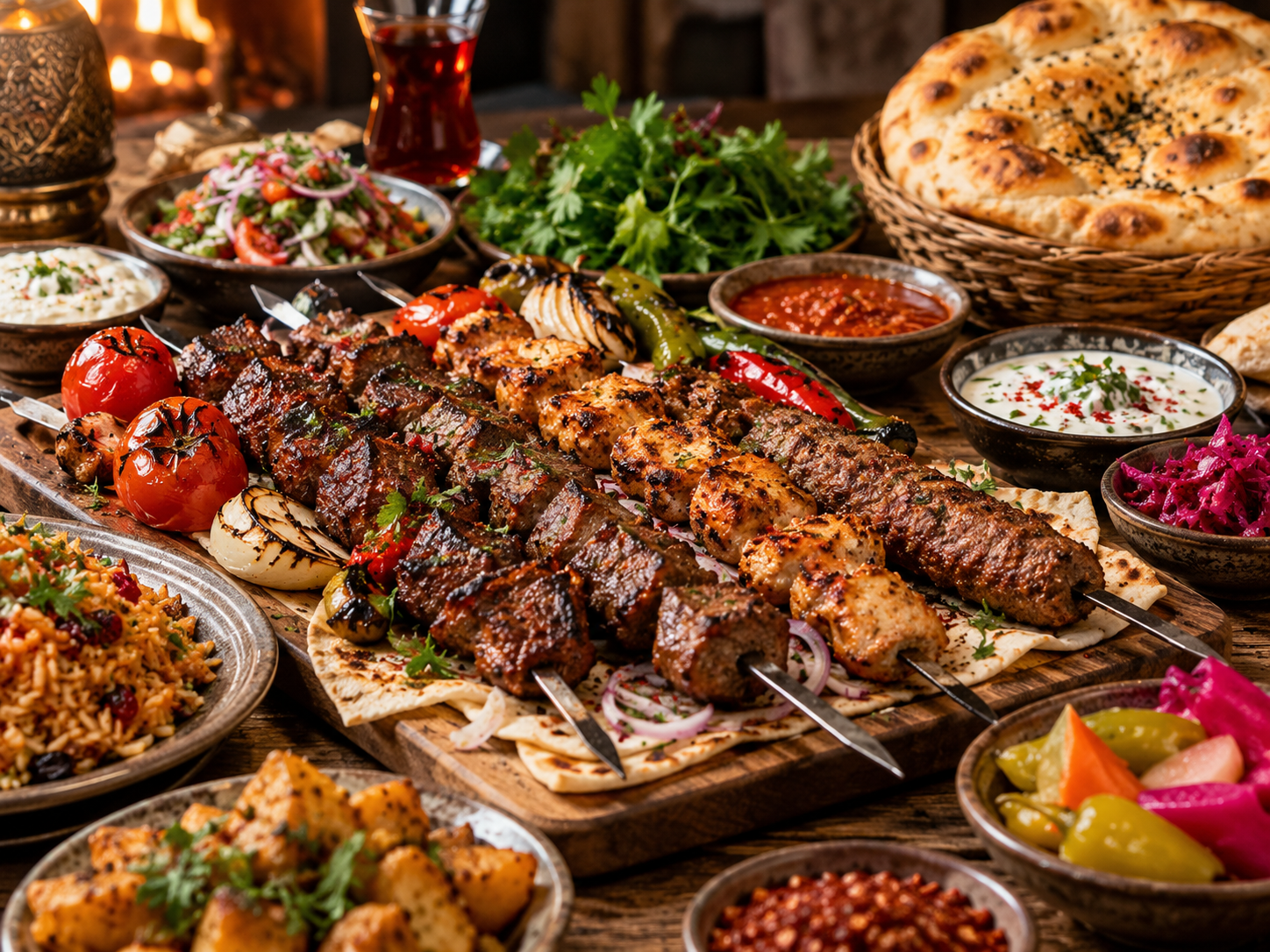
The Grill
Choose the fire before you choose the plate.
The fire is not one dish. It is three habits of cooking, and choosing among them matters more than choosing a garnish. Shashlik is meat in cubes on a skewer. Kebab and doner are minced or layered, sliced or served as a ribbon. The shared grill is several of those plates put in the middle of a table that intends to stay. The notes below are grouped that way: by cut, by pace, and by how the table has to be set. Prices stay on the menu in the room. This page is about the food. Read it when you are choosing between one plate and a table that shares. A first visit is usually happier with shashlik, because the cut is visible and the plate is complete. A second visit is when the kebab, the doner and the mixed grill start to make sense, because you already know the seasoning and the pace. Come for lunch if you need to leave. Come for dinner if the point is to stay. After half past nine, ask what the fire still has before you promise the table a particular meat.
01
Shashlik
Cubed lamb, chicken and beef go on flat skewers after they have been salted and spiced in the house. The outside takes the char. The centre stays juicy if the piece was cut properly and not rushed. Lavash comes under or beside the meat, and vegetables that have been on the same fire — tomato, pepper, sometimes onion — come with it. This is the clearest plate for a first visit and the right one when only one person wants grilled meat. Ask which cut is actually on the grill that service. The style is constant. The availability is not. People who know they want lamb should say lamb, and should be ready to hear that the lamb has finished. The same is true of chicken and of beef. The house grills what it has prepared for that service, in pieces large enough to take a proper char and small enough to cook in the time a table is willing to wait. A skewer is not a steak and it is not a minced kebab. If you want it plainer, or without the usual pepper and onion beside it, say that with the order. The plate is simple enough that small changes are easy, and specific enough that silent changes are not.
02
Kebab
House kebab is minced meat worked with onion, pepper and herbs, then grilled as a long ribbon rather than as separate cubes. Doner is a different build: thin layers of meat stacked on the vertical spit, turned through the service and carved when the plate is called. Both arrive with herbs, a chopped salad, pickles and warm bread. Both are a full plate. Order them when you want the seasoning in the meat itself, not only on the surface. If the spit is down, or the kebab mix of the day has sold through, the house will say so rather than rename a skewer. The seasoning sits inside the kebab, which is why it tastes different from a cube of meat with spice on the outside. Doner takes its flavour from the way the layers cook as the spit turns, crisp at the edge and softer inside. Choose these when the table wants that deeper seasoning, or when someone would rather not deal with a skewer. They are complete with salad and bread. A second plate is optional. A shared grill can include one of them beside the skewers, if the fire still has both and the table is large enough to justify it.
03
Shared
The shared grill puts several of those things on one table: skewers of more than one meat, a kebab, grilled vegetables, herb bread or lavash, and the cold counter of salads and pickles within reach. It is the right order when people want to taste across the fire instead of committing to a single plate. It needs space and a bit of time. It is a poor fit for someone who has twenty minutes and a meeting after. Above four guests, and on a busy evening even at four, ask the house to confirm that the table and the mix can both be done. The shared grill is also the plate that shows a first-time table what the house actually does, because the cuts sit next to each other instead of arriving as a theory. It asks for a little patience at the start. The meat does not all leave the fire at the same second, and the bread and salads come so the early pieces are not eaten alone. Do not order it if half the table has to leave in twenty minutes. Do order it if the point of the evening is the table itself. Say how many people will really be eating from it, so the kitchen builds a mix that matches the group rather than a picture on a page.
Table notes
Arrival
A table is held when the house has confirmed the day, the hour and the number of guests. Until that confirmation comes back, the message is only a request. Walk-in seating follows whatever the room has left, and it is the normal way to eat here when the party is small and the hour is not the peak of dinner.
Late seating
After 9:30 PM the door is still open, but the full grill may already have narrowed to the cuts and the spit that are left. If you need a particular meat, or the whole shared spread, do not leave it to the last hour. The kitchen would rather tell you what is still possible than stretch a board it can no longer cook properly.
Capacity
The shared table depends on the room, not on a promise printed here. Large parties should call before they travel, say how many seats they need, and wait for a yes. Pushing tables together at the door makes a worse meal, and on a full evening it may not be possible at all.