About
A grill house should publish its standards, not just a slogan.
SULTAN GRILL is a shashlik and kebab restaurant with one dining room and one standard: the fire, the
table and the way a guest is told the truth before ordering. The pages are organized around that, not
around a slogan. You can read how the grill is run, how the room is set, and what the kitchen will and
will not promise. The telephone, the email and the street address live on the contact page and in the
footer. Nothing on this page is a booking, a price list or a claim about an award. The standard is ordinary and it is checkable. Meat is cooked to order or carved from the spit when you ask for it. A table for more than four is agreed before you travel. An allergy is heard before the plate is dressed. A price is the one on the menu in the room, in Chilean pesos, with IVA included. If a page says something the room no longer does, the room wins and the page gets corrected. That is the whole of the promise. It does not need a founding year, a critic's score, or a certificate we have not posted.
House standards before the first visit
A first visit is easier when the grill, the dining room and the kitchen line are already clear.
Meat is seasoned in the house and cooked to order on the fire or cut from the spit. It is not
finished from a heat lamp and then described as grilled. Tables are set for the size of the party,
and a group that needs more than four seats is asked to speak to the house first so the room is
ready. Allergies are taken at the table, in plain language, before the bread and the sauces go
down. The site keeps those notes visible. It uses the telephone and the email on the contact page
instead of a hidden booking form, because a form would collect details the house does not need a
website to hold.
Read visit notes
The grill
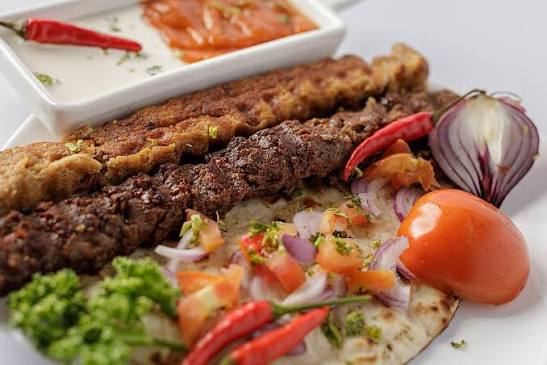
Shashlik is cubed lamb, chicken or beef on a flat skewer. Kebab is minced, with onion, pepper and
herbs, and grilled as a ribbon. Both are seasoned in the house and put on the fire for the order in
front of the kitchen, not held under a lamp and re-described as fresh. The doner spit is a different
rhythm: layered meat turns through the service and is carved when the plate is called. If a cut has
sold through, the house says so. The board on the website describes the style. It is not a promise
that every meat is on the fire at every hour.
The dining room
A table for two is set for plates. A shared table is set wider, because skewers, lavash, salads and
a sauce have to sit where everyone can reach them. Walk-ins are seated as the room allows. A party
of more than four, and any table that wants the full shared grill on a busy evening, should speak
to the house before travelling. A confirmed hour is a hold. An unanswered message is not. Children
are welcome when the adults with them keep the table usable for the next guests.
The kitchen line
The spit, the bread and the cold counter of pickles, herbs, onion and sauces stay where they can be
seen. That is deliberate. Guests should be able to tell the difference between meat from the fire,
meat from the spit, and the salads that cut the char. Dislikes and allergies are asked, not guessed.
The kitchen handles wheat in the bread and the lavash, dairy, sesame and all of the meats on the
grill. It does not describe itself as free of any allergen, and it does not claim a certification
that is not posted in the room.
What we publish clearly
We publish the hours, the way a table is requested, what the grill cooks, and what the kitchen will not
promise. We publish that prices are shown on the menu in the dining room in Chilean pesos, with IVA
included, before you order. We do not publish invented awards, a false year of founding, or a review
score. The street address, the telephone and the email are kept to the contact page and the footer, so
the rest of the site can talk about the food without scattering the same contact line through every
paragraph. If a page and the menu in the room ever differ, the menu in the room is the one that applies. Write and tell us which line has drifted. The correction belongs on the page. The meal in front of you should not have to wait for it. Guests who already know the difference between a skewer, a kebab, a doner and a shared table can skip to the contact page. Guests who do not can read the house notes and the grill notes first. Either way the telephone number and the street address stay in one place, so they are not copied slightly wrong from page to page. The rest of what we owe a reader is consistency. The same hours appear wherever the hours are stated. The same three styles of meal — skewer, kebab or doner, shared grill — are described in the same way, so a person who reads only one page is not sold a different restaurant from the person who reads three. Photographs show real plates from this kitchen. They are not a promise that the identical arrangement is on the fire tonight. When the page and the room disagree, believe the room, tell us, and the page will be brought back into line. That is a dull standard. It is also the one that keeps a website from becoming advertising.