SULTAN GRILL
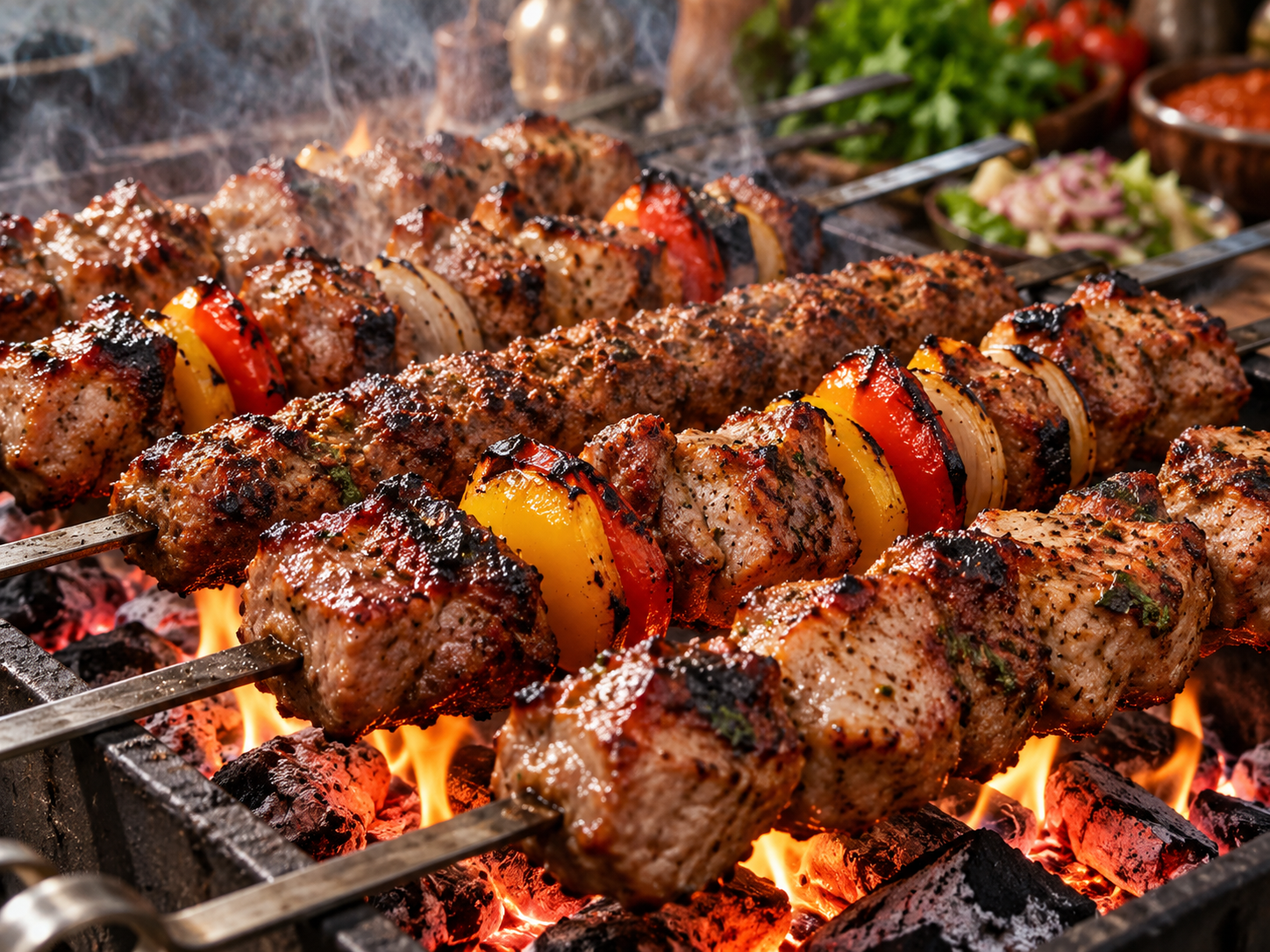
Kebab on lavash with roasted potatoes, tomato and pickled cabbage

Shashlik and kebab house

Fire, skewer and a table worth staying for.

The house cooks on an open grill: shashlik of lamb, chicken and beef, minced kebabs, and doner cut from the vertical spit. Plates leave the pass with lavash, herbs, pickles and a cold salad, and a shared table can add grilled bread, roasted vegetables and a longer round of sides. This page is the map of that service. It shows which plate fits a short lunch, which one is meant to stay in the middle of the table, and how the room changes between the first seating and the late hour. There is no booking form here. You read the route, then use the contact page when you want the house to hold a table. A single skewer is the short meal: one cut, bread, salad, a sauce, and you are done. A kebab or a plate of doner is the same length with a different build of meat. The shared grill is the meal that stays on the table, with more than one cut and the cold salads in reach of everyone. Lunch favours the first two. Dinner is when the third one makes sense. None of that requires an account, and none of it is stored on the site, because the site never asks you to type it.

One grill. A clear table.

Order without the guesswork.

Use the site to compare a single skewer, a kebab plate and a shared platter before you decide how long the meal should last. Shashlik is cubed meat on a flat skewer, finished over the coals and sent out with lavash. Kebabs are minced and spiced in the house, then grilled in a longer ribbon. Doner is layered on the vertical spit and carved when you order it. The cold counter sits beside that fire: herbs, onion, pickles, chopped salad and a simple sauce, so the char has something fresh against it. Hours, the shape of the room and the difference between a quick lunch and a late shared table are all written out here. No booking form is placed on the home page, and nothing you read is stored as a reservation until the house confirms it. If you are deciding for other people, the useful split is simple. Someone who wants to eat and leave should take a plate. Someone who wants to try lamb and chicken and a kebab at the same time should ask for the shared grill and should say how many seats that requires. The photographs show the style of those plates. They are not a promise that every item in a picture is on the fire at the hour you walk in. The house would rather tell you what is left than rename a dish.

See the direct contact route
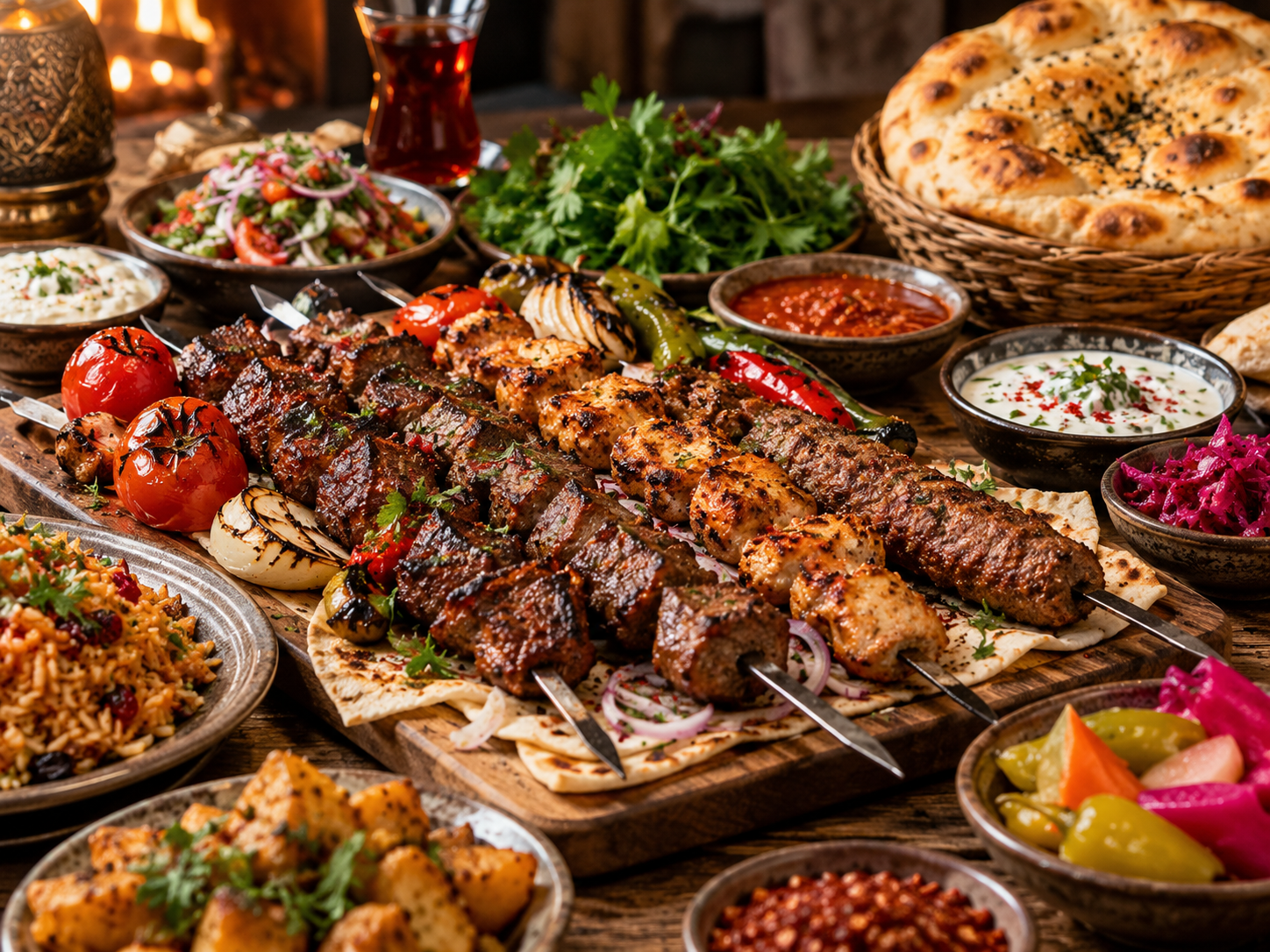
Mixed grill board of kebabs, flatbread and salads

Grill plates, shared menus and visit notes in one place.

Guests tend to arrive with the same practical questions, and the page is built around those rather than around a slogan. What is on the fire today. Whether lunch is a single plate or whether the kitchen will still build a mixed grill. How a group should ask for a table, and how early that ask needs to be on a busy evening. What changes after the first seating, when the room is full and the late hour starts to limit the board. The notes stay in ordinary language so you can decide the shape of the meal before you travel, then confirm only the details that actually move: the hour, the number of seats, and any allergy. Bring those three things to the contact page and the conversation is short. Leave them out and the house has to ask them anyway. Wheat is in the bread and the lavash. Dairy and sesame can appear in sauces and dressings. The grill is meat. If any of that is a problem, it belongs in the first message, not as a surprise when the plate is already dressed.

  • 01 Choose the table first. A skewer plate is the short route: one meat, lavash, salad and a sauce. A kebab or a doner is the same idea with minced meat or meat from the spit. A shared grill is the long route, built for two or more, with several cuts, grilled vegetables and the cold counter in the middle.
  • 02 Check the hour before you leave. Lunch is the easier window for a quick plate. The afternoon is quieter. Dinner, especially late in the week and on weekends, is when the shared tables fill and a large party should already have spoken to the house.
  • 03 When you are ready, use the contact page. Say the day, the hour, how many people are coming, and whether you want a single plate or the shared grill. A request is only a hold once the house confirms it back.

House routes

A full service of fire-cooked plates. A short list of practical notes.

Before sitting down, most people are really comparing four things: the skewers, the kebab plates, the way the dining room is set, and what the kitchen line is doing behind the pass. This section is that comparison, written as notes rather than as a list of amenities. It will not tell you today's price. Prices are on the menu in the room, in Chilean pesos, with IVA included, and they are confirmed before you order. It will tell you what each part of the house is for, so a first visit does not have to be a guess between a quick plate and a table that stays for the evening.

Shared grill table with flatbread, tea and fruit by the window

Grill skewers

Lamb, chicken and beef are cut into cubes, seasoned in the house and grilled on flat skewers. The plate comes with warm lavash and vegetables that have seen the same fire, usually tomato, pepper and onion. Ask which cut is on that service. The board moves, and a meat that was offered at lunch may be finished by the late seating. If you want the meat plain, or without onion, say so when the table orders.

Kebab plates

The kebab is minced meat, worked with onion, pepper and herbs, then grilled as a long ribbon rather than as cubes. It is served with a chopped salad, more herbs, warm bread and a simple sauce. Doner from the vertical spit sits in the same family: sliced to order, with the cold counter of pickles, cabbage, onion and sauce beside it. Both are a complete plate. They do not need a second course unless the table wants one.

Dining room

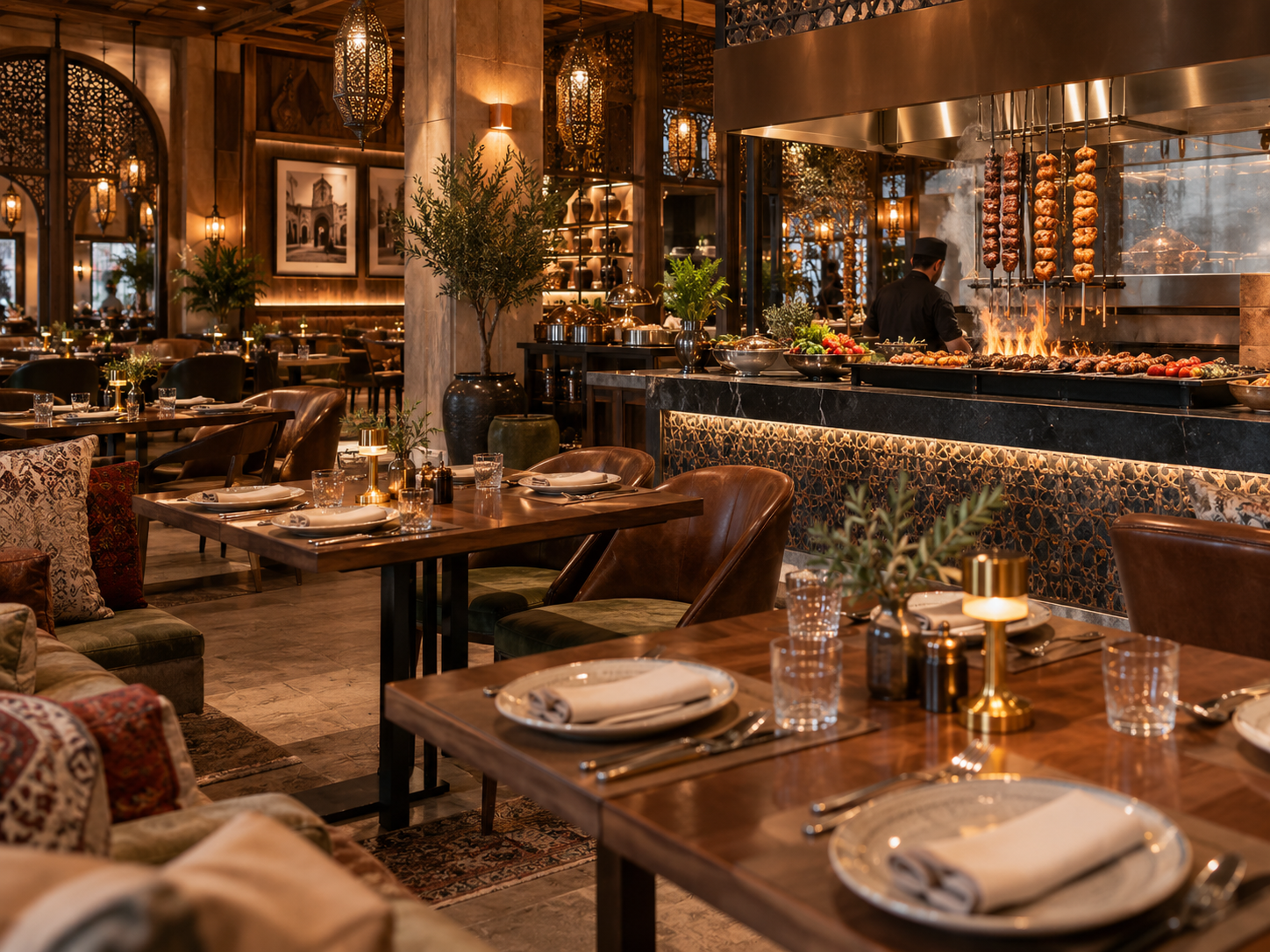
The room is set for two kinds of meal. A small table is for a plate and a conversation that does not need the whole evening. A shared table is wider, because the grill, the bread and the salads have to sit where everyone can reach them. Window seats and the quieter corner both depend on the hour and on how many seats you need. For more than four guests, ask ahead so the table can be put together before you arrive rather than assembled once you are already at the door.

Kitchen line

Behind the pass, the vertical spit turns beside the bread and the cold counter. Pickles, herbs, chopped onion, cabbage and the sauces are laid out where the cooks can reach them, not hidden in a back room. Grilled bread and herb flatbread leave with the meat. If you want extra lavash, extra salad or the sauce on the side, ask when the plate is ordered. The kitchen will not guess a dislike, and it will not claim the room is free of wheat, dairy or sesame.

First visit

Sitting down for shashlik does not need a hard sell.

  1. Resolve Decide what the meal is for. A skewer plate answers hunger and a short hour. A kebab or a doner does the same with minced meat or meat from the spit. A shared grill is a different decision: several cuts, bread and salads, and enough time to let the table work through them. The rest of the visit is easier once that choice is made.
  2. Map Match the choice to the hour and the party. Two people at lunch can sit without a plan. Four people at dinner still fit a walk-in when the room allows. More than four, or a table that wants the full shared grill on a weekend evening, should already have a confirmed hour. Late seating after 9:30 PM may be limited to what is still on the fire.
  3. Repeat After the first meal, the hours board and the menu notes are enough to plan the next one. You already know whether you want the short plate or the shared table, which hour suits the party, and what to tell the house about allergies. The second visit should not need a second tour of the site.

Dining plan ledger

The three table styles below are not prices and they are not a contract. They are the ways the kitchen actually sends food out, written so you know what to ask for. A price, when you need one, is on the menu in the dining room, in Chilean pesos, with IVA included, and it is confirmed before the order goes to the fire. Use the ledger to choose a style. Use the contact page only when you need the house to hold seats.

Shashlik plate with potatoes, peppers and herb flatbread

Common guest note

Most people want the menu clear before they arrive.

The questions repeat, and they are reasonable. Which meats are on the fire this service. Whether a table can be shared or whether the kitchen would rather send individual plates. How busy the room gets after work, and whether a weekend evening still has room for a walk-in. Where to leave a car without blocking a doorway. What to say if someone at the table does not eat a particular meat, or cannot have wheat, dairy or sesame. This site puts those notes in the open before you call, so the call itself can be short: day, hour, number of guests, and anything the kitchen must hear before it lights an order. Parking is ordinary street parking or a nearby public car park. Do not block a doorway. The room is one dining room, not a chain of them, and the only address worth putting in a map is the one in the footer and on the contact page. Read the rest here. Use that line only when you are actually ready to travel. Until then the useful reading is the shape of the meal, not the coordinates. Decide whether you want a plate or a shared table. Decide whether you are coming at lunch, in the quiet afternoon, or at dinner. Decide whether anyone at the table cannot eat wheat, dairy, sesame or a particular meat. With those three decisions made, the contact is a short message and the evening is simpler. Without them, the house has to ask, and you are standing at the door having the conversation you could have finished here. The site is that conversation, written down, so the room itself can get on with the fire.

Read visit notes
Planning questions

Quick answers before the first table

What should I check before I come?

Check four things and you are ready. The hour you want, because lunch, afternoon and dinner are different rooms even though the door is open the whole time. The size of the party, because more than four should be confirmed. Whether you want shashlik, kebab, doner or the shared grill. And whether anyone needs the kitchen to hear about an allergy before the bread and the sauces are already on the table.

Is the full fire menu on all day?

The fire is lit for the day, and it is not a fixed catalogue. A cut can sell through. The doner is carved until the spit is done. After 9:30 PM the board often narrows to what is still on the grill, even though the door stays open until 11:00 PM. If a particular meat is the reason you are coming, ask the house about that service before you leave home. The page can describe the style. It cannot promise the spit.

Is there a form on this site?

No. There is no form, no account and no newsletter box. A table request goes by telephone or by email, and both are printed on the contact page and in the footer. The site itself stores nothing you type, because there is nowhere to type it. The only thing kept in the browser is a note that you closed the cookie notice.